
What are RFNBOs?
Renewable Fuels of Non-Biological Origin
20 August 2026
Renewable Fuels of Non-Biological Origin (RFNBOs) are renewable liquid or gaseous fuels made using energy from renewable sources other than biomass.
In practice, RFNBOs are associated with renewable/green hydrogen and fuels made using green hydrogen, i.e. eFuels. They include fuels such as eMethanol, eAmmonia and synthetic aviation fuel (electro Sustainable Aviation Fuel/eSAF/eKerosene) if they meet the EU’s renewable energy and greenhouse gas requirements.
The European Union has created a specific legal category for RFNBOs because these fuels are expected to help reduce emissions from sectors where direct electrification is difficult, particularly aviation, shipping and heavy industry. These are set out in the revised Renewable Energy Directive (RED III) which sets binding RFNBO targets for transport and industry.
Which Fuels are RFNBOs?
Under the EU Renewable Energy Directive (RED III), an RFNBO is a liquid or gaseous fuel whose energy content comes from renewable sources other than biomass.
The term is important because it separates these fuels from biofuels.
For example, ethanol produced from crops is a biofuel because its energy comes from biological material. On the other hand, renewable hydrogen produced by electrolysis using renewable electricity would qualify as an RFNBO because its energy comes from renewable electricity rather than biomass.
The term non-biological origin does not necessarily refer to the source of every molecule used to make the fuel. It refers primarily to where the fuel’s energy content comes from. This distinction is relevant when CO₂ is combined with renewable hydrogen to manufacture carbon based eFuels.
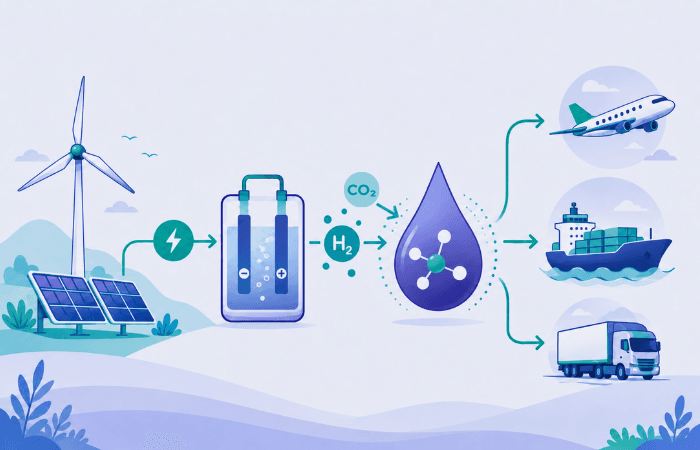
Renewable hydrogen is the main starting point for most RFNBO production. Electricity from wind, solar or another qualifying renewable source can be used in an electrolyser to split water into hydrogen and oxygen:
renewable electricity + water → renewable hydrogen
That hydrogen can be used directly or converted into other fuels.
Common RFNBO pathways include:
- Renewable hydrogen: produced using qualifying renewable electricity.
- eMethanol: produced from renewable hydrogen and a carbon source.
- eAmmonia: produced using renewable hydrogen and nitrogen.
- eMethane: produced using renewable hydrogen and CO₂.
- eKerosene or eSAF: produced using renewable hydrogen and captured CO₂.
- eDiesel and other synthetic hydrocarbons, where the production route meets RFNBO requirements.
RFNBOs and eFuels: What Is the Difference?
Simply calling a fuel “green”, “renewable” or an “eFuel” does not automatically make it an RFNBO. It must comply with the EU criteria covering renewable electricity, production conditions and lifecycle greenhouse gas emissions. eFuel is a broad term for fuels produced using electricity, usually through a Power-to-X process. RFNBO, on the other hand, is a defined regulatory category under EU legislation. Many eFuels can therefore be RFNBOs but only when they meet the EU rules.
Using a common RFNBO definition allows the EU to determine which fuels can count towards renewable energy targets and regulatory obligations, e.g. ReFuelEU.
Why Captured CO₂ Is Important for eFuels and eSAF
Hydrogen provides the energy input for many eFuels but carbon is required when producing hydrocarbon fuels such as eKerosene and eMethanol. Captured CO₂ can therefore become a feedstock rather than simply being treated as a waste gas.
Direct Air Capture has a particular long-term role because CO₂ is removed directly from ambient air and does not have the potential supply issues of biogenic CO₂. Renewable hydrogen can then be combined with this atmospheric CO₂ to produce synthetic fuels. In this case, carbon that has already entered the atmosphere is used as the feedstock for producing a replacement for fossil derived fuel. The climate benefit still depends on renewable energy use, production efficiency and lifecycle emissions.
Why Has the EU Created RFNBO Rules?
RFNBO legislation serves several purposes.
- It creates a recognised method for replacing fossil hydrogen.
- RFNBOs provide renewable fuel options for sectors where batteries or direct electrical connections cannot easily provide all required energy, e.g. aviation and long-distance shipping.
- It prevents renewable fuel targets from being met using hydrogen or synthetic fuels made with high-carbon electricity.
Therefore, EU rules examine how the electricity was produced, when it was produced and where it was produced as well as the final fuel manufactured.
How RFNBOs Fit into EU Climate Policy
RFNBOs connect several parts of EU energy and climate policies that fall under the European Green Deal and they provide the common regulatory definition linking renewable hydrogen with many of these policies. This definition also gives project developers, fuel producers and buyers a common standard for determining what qualifies as renewable hydrogen or a renewable synthetic fuel.
RFNBOs AND TRANSPORT
By 2030, RFNBOs and advanced biofuels must together represent at least 5.5% of energy supplied to the transport sector, with at least 1 percentage point coming specifically from RFNBOs.
Under the ReFuelEU Aviation Regulation, synthetic aviation fuel (eSAF) made from renewable hydrogen and captured carbon is legislated as a separate requirement under sustainable aviation fuels. That requirement begins at 1.2% from 2030 and increases to 35% by 2050. This creates a direct regulatory market for RFNBO-derived aviation fuels. As a result, eSAF is moving from a voluntary aviation decarbonisation option towards a fuel required by EU legislation.
FuelEU Maritime includes RFNBOs for Shipping. In this case, rather than prescribing one specific fuel, FuelEU Maritime progressively reduces the permitted lifecycle greenhouse gas intensity of energy used on board ships. The required reduction starts at 2% from 2025 and reaches 80% by 2050 via a staged trajectory: 2% (2025) → 6% (2030) → 14.5% (2035) → 31% (2040) → 62% (2045) → 80% (2050). RFNBOs such as eMethanol, eAmmonia and renewable hydrogen can be used as part of compliance strategies in shipping.
RFNBOs AND INDUSTRY
RED III also introduces a large requirement for renewable hydrogen use in industry. RFNBOs must account for at least 42% of hydrogen used for final energy and non-energy purposes in industry by 2030, rising to 60% by 2035, subject to provisions within the Directive.
RFNBOs AND THE EU ETS
RFNBOs also interact with the EU Emissions Trading System. EU ETS monitoring rules recognise qualifying RFNBOs and provide for eligible renewable fuels to receive appropriate emissions treatment where the Renewable Energy Directive sustainability and greenhouse gas requirements are met.
Conclusion
RFNBOs are the EU’s regulatory category for renewable liquid and gaseous fuels whose energy comes from renewable sources other than biomass. Renewable hydrogen sits at the centre of the category and can be converted into eFuels. Through RED III, ReFuelEU Aviation and FuelEU Maritime, the EU is creating mandatory demand for these fuels in industry and transport. For aviation in particular, the eSAF mandate means RFNBOs are set to become increasingly important.
For more:
- What is eFuel?
- Methanol-to-Jet Fuel
- What is eMethanol?
- eMethane Made Using Captured CO2 and Green Hydrogen
- eMethane vs eMethanol vs eSAF
- The Path to Sustainable Aviation White Paper by Prof. Don MacElroy
- CORSIA vs EU ETS: Why the Difference is Relevant for Direct Air Capture (DAC) and eSAF
- Lift Off for NEG8 Carbon in Sustainable Aviation Fuel
Sources
- European Commission – Renewable Energy Directive
- EUR-Lex – Directive (EU) 2023/2413, RED III
- European Commission – Renewable Hydrogen
- EUR-Lex – Delegated Regulation (EU) 2023/1184
- EUR-Lex – Delegated Regulation (EU) 2023/1185
- European Commission – ReFuelEU Aviation
- EUR-Lex – Regulation (EU) 2023/2405, ReFuelEU Aviation
- European Commission – FuelEU Maritime
- EUR-Lex – FuelEU Maritime Summary
- European Commission – Renewable Hydrogen Production Rules