

Heavy industries are large carbon emitters that also produce sizable amounts of heat. Direct Air Capture (DAC) systems can use this waste heat to power the capturing of carbon dioxide from the atmosphere to decarbonise industry.
Using Industrial Waste Heat for Carbon Capture
Industrial sites are ideal locations for carbon removal systems that operate using heat energy already available on site. Studies estimate that 20%–50% of energy used in industrial processes is lost as waste heat, representing a substantial, untapped energy source for carbon capture systems. (ScienceDirect) In Europe alone, the potential industrial waste heat resource is estimated at 280-300 TWh per year. (Climeon) Using this heat allows DAC systems to operate with lower energy costs while supporting the decarbonisation of hard-to-abate sectors.
Most DAC technologies require heat to regenerate the capture material and release concentrated CO₂. By co-locating and integrating DAC units with industrial sites, existing waste heat streams can be used instead of electricity or natural gas.
Typical heat sources include exhaust gases from furnaces, cooling systems from large process equipment, kilns and smelting operations, and chemical reactors and boilers.
Learn more: Direct Air Capture Using Waste Heat
Industries Suited to Integrating with Direct Air Capture
 Cement and Concrete
 Cement and Concrete
For more details, see: Decarbonising Construction by Storing CO2 in Concrete
Cement and lime plants operate kilns at temperatures above 1,400 °C. Large quantities of heat are lost through exhaust gases and cooling systems.
DAC systems can use this waste heat to capture atmospheric CO₂. The captured carbon can then be:
- Injected into concrete during curing
- Converted into carbonate aggregates
- Used as a feedstock for synthetic eFuels
This creates a closed carbon loop within the construction supply chain.
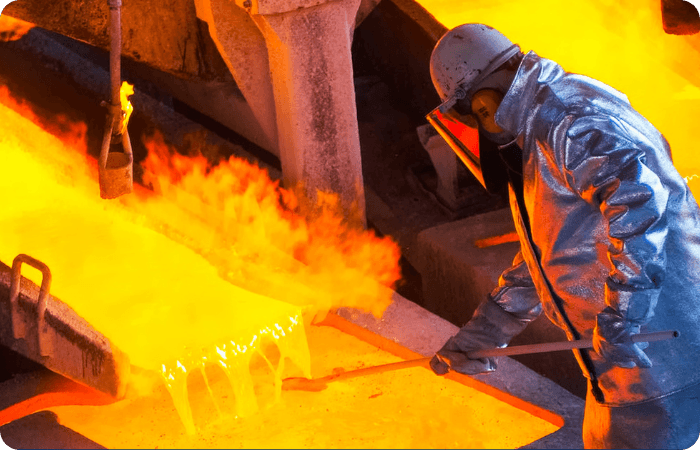
Aluminium
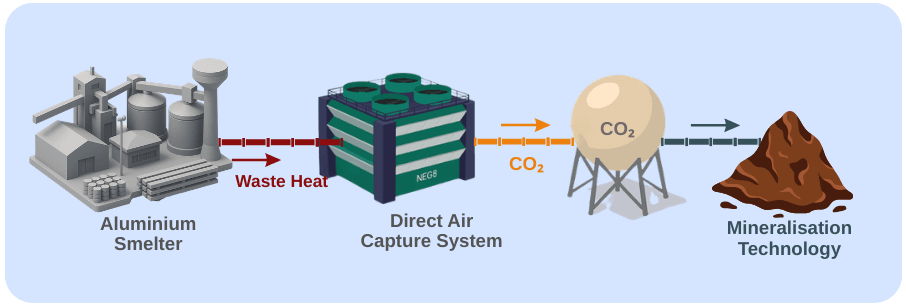
Direct Air Capture (DAC) can be integrated with alumina refineries and aluminium smelters to address emissions that cannot be reduced through conventional process improvements.
By operating alongside existing systems, DAC provides a method to remove CO₂ directly from air. DAC:
- Removes residual CO₂ emissions from processes such as calcination and anode consumption
- Uses low-grade waste heat from operations for sorbent regeneration
- Enables on-site use of captured CO₂, for example in red mud and caustic waste stream neutralisation
- Supports compliance with emissions targets without major changes to core production processes
Steel
For more details, see: Decarbonising the Steel Industry
Steelmaking requires high temperatures and produces large amounts of waste heat from blast furnaces, basic oxygen furnaces, coke ovens and reheating furnaces. The steel sector produces about 1.85 billion tonnes of steel each year and contributes roughly 6.5% of global CO₂ emissions.
DAC systems can be integrated near these facilities to use the waste heat streams, and the captured CO₂ can then be used for:
- Synthetic fuels such as eMethanol or eSAF
- Carbonation of steel slag for use as an aggregate product
This allows steel producers to support negative emissions while improving overall energy efficiency.
Chemicals and Refineries
For more details, see:
– Sustainable Plastic Manufacturing
– Sustainability in the Chemicals Industry
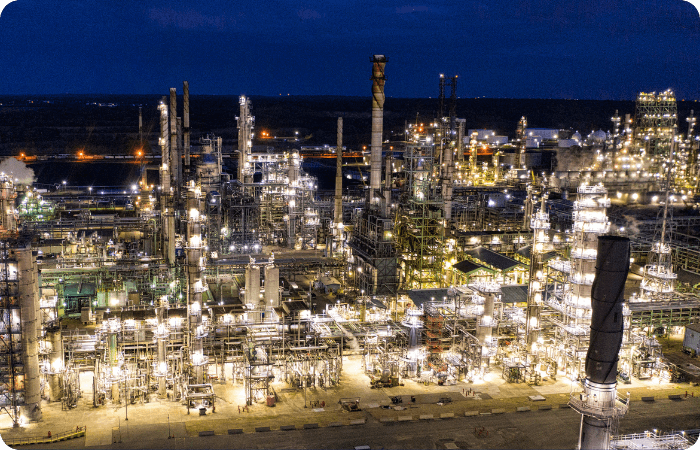
Chemical plants, fertiliser production, and oil refineries operate large reactors, distillation columns, and furnaces that release continuous heat streams.
DAC systems can be integrated with these facilities to:
- Produce CO₂ feedstock for synthetic eFuels
- Supply carbon for chemical manufacturing
This approach allows industrial sites to become carbon removal hubs rather than just emission sources.
Glass Production
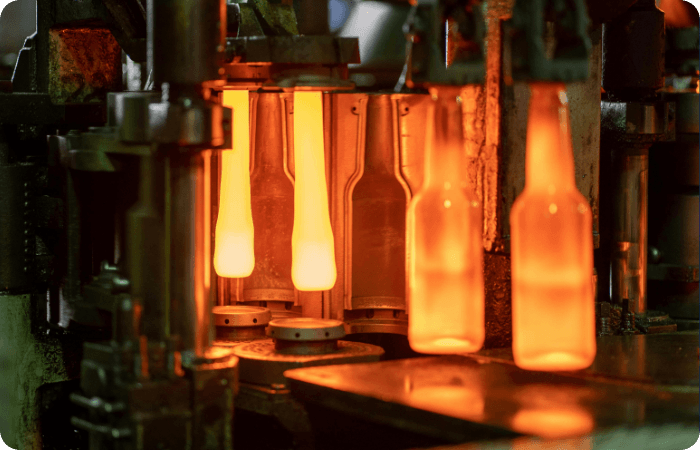
Direct Air Capture systems can use waste heat from glass melting furnaces, which typically operate at 1,400–1,600°C, to supply thermal energy for DAC sorbent regeneration. The heat can be sourced from:
- Furnace exhaust gases and flue stacks through heat recovery systems that can supply medium-temperature heat to DAC units.
- Heat released during annealing and cooling stages of glass production where large volumes of hot air are vented from the process.
- Install DAC systems near continuous furnace operations, which provide stable heat streams suitable for round-the-clock carbon capture.
DAC can integrate with glass manufacturing facilities to:
- Use captured CO₂ for synthetic eFuel production
- Mineralisation of CO₂ in construction materials
This process supports the decarbonisation of the glass sector, which accounts for around 86 million tonnes of CO₂ emissions annually in Europe.
Why Integrating Industry and Direct Air Capture Matters
Combining DAC with heavy industry delivers three key benefits:
- Lower energy demand
Waste heat replaces new energy supply for the DAC process. - Industrial decarbonisation
Hard-to-abate sectors can contribute to carbon removal while reducing emissions. - Circular carbon use
Captured CO₂ becomes a feedstock for fuels, materials, and mineralisation processes.
Final Thoughts
As global industry seeks pathways to net-zero emissions, integrating DAC systems with industrial waste heat offers a practical route to deploy carbon removal at scale.
For more:
- Sustainable Aviation Fuel (SAF)
- What is eFuel?
- What is eMethanol?
- Sustainable Data Centres with Direct Air Capture
- Decarbonising Construction by Storing CO2 in Concrete
- Decarbonisation