
Sustainable Aviation Fuel (SAF) can be produced through several pathways. One established route uses waste oils and fats, where feedstocks such as used cooking oil are hydroprocessed to produce aviation-grade hydrocarbons.
However the primary long-term pathway is electro-Sustainable Aviation Fuel (eSAF), which is synthesised from captured carbon dioxide (CO₂) and green hydrogen produced using low-carbon electricity.
eSAF Production from Captured CO₂ and Green Hydrogen
In the eSAF pathway, carbon is obtained from atmospheric CO₂ capture using Direct Air Capture or industrial point sources. Hydrogen is produced through electrolysis of water, and the hydrogen and CO₂ are then converted into synthetic hydrocarbons suitable for aviation fuel. The efuel produced works in aeroplane engines in the same way as conventional jet fuel, providing a ‘drop-in’ fuel that requires no modifications to existing engines.
Diagram: Manufacturing eSAF Using DAC-captured CO₂ and Green Hydrogen
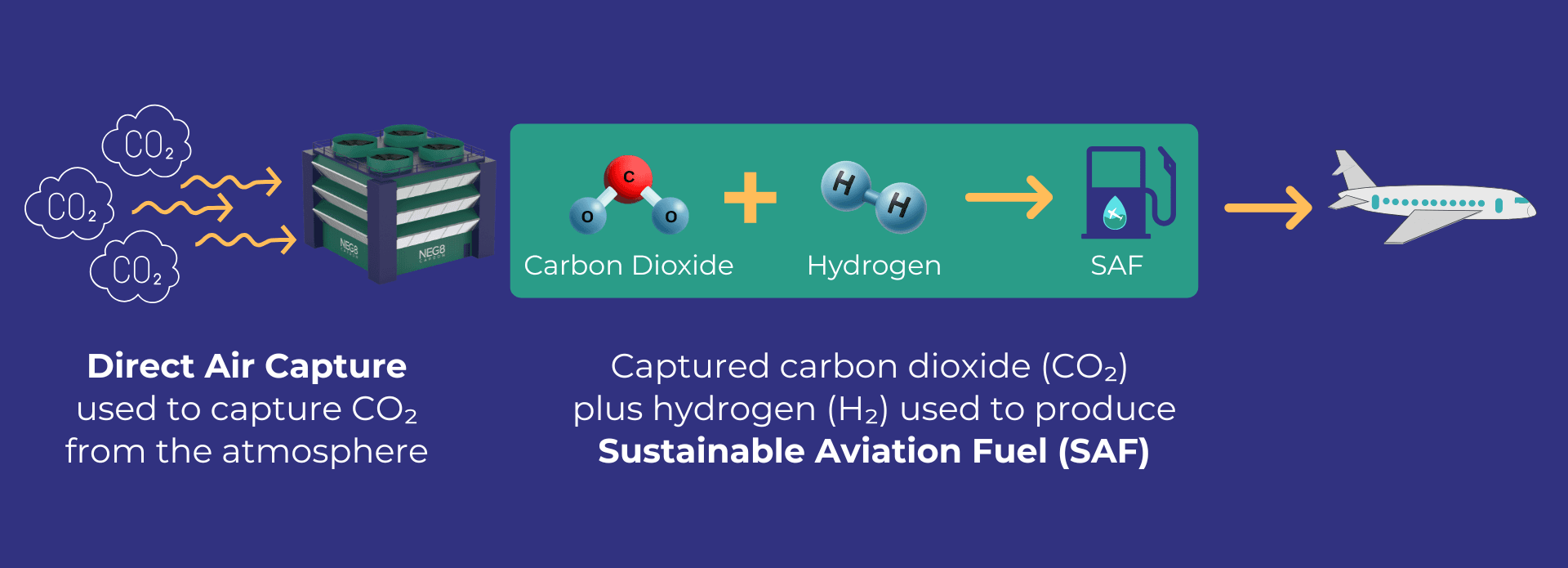
The process typically involves the following steps:
CO₂ Capture
CO₂ is captured either directly from air using Direct Air Capture or from industrial exhaust streams. The captured gas is purified and compressed.
Hydrogen Production (Electrolysis)
Water (H₂O) is split into hydrogen (H₂) and oxygen (O₂) using electricity in an electrolyser. The reaction is:
- 2H2O→2H2+O2
Synthesis Gas Formation
CO₂ and H₂ are reacted to produce synthesis gas (carbon monoxide and hydrogen mixture), commonly via the Reverse Water Gas Shift reaction:
- CO2+H2→CO+H2O
Fuel Synthesis
The synthesis gas is converted into liquid hydrocarbons using catalytic processes such as Fischer–Tropsch synthesis. The resulting hydrocarbons are refined to meet aviation fuel specifications (Jet A / Jet A-1).
Fuel Blending and Certification
The synthetic fuel is blended with conventional jet fuel where required and certified under aviation standards.
Why the Hydrogen is “Green”
Hydrogen is classified as “green” when it is produced using electricity from low-carbon energy sources rather than fossil fuels. The carbon intensity depends entirely on the electricity source used in electrolysis.
Possible electricity sources include: wind power, solar photovoltaic, hydroelectric power, geothermal energy and nuclear power (near-zero-carbon baseload electricity).
When low-carbon electricity is used, lifecycle emissions are reduced because no fossil carbon is introduced during hydrogen production.
For more:
- Sustainable Aviation Fuel
- How does SAF Reduce Emissions?
- SAF vs Jet Fuel
- Why Direct Air Capture is Critical to Sustainable Aviation Fuel Production
- SAF Regulations
- What is eFuel?
- What is eMethanol?